
In Rabbi Rebecca’s words: “The most brutal change, we know, is death and it often leaves us bereft but sometimes there is a grateful acceptance for a long and well lived life. Sometimes it’s a wrenching loss too soon. We’ve sustained two such ‘changes’ at FPS of people who have been in the fabric of our synagogue. Lionel Lassman was the former death and Lesley Urbach the second.
We have taken time to mourn and are profoundly changed by it. That’s ok. Change is part of life and as we approach this New Year we get to look back and assess what changes we’ve sustained these past twelve months and wonder what will come for the next year.”
You can find tributes below for Lesley and Lionel below, together with a poem written by Lionel some time before his death.
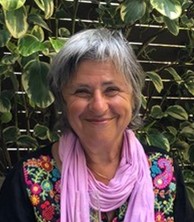
I am so sorry.
I am so sorry for Lesley. For Peter and for all of us her family, her community her friends. For me.
And Lesley was extraordinary (in lots of ways) but one particular way was this. She really understood community.
As Rabbi Sheila taught all of us-you don’t choose a community -you build one. And Lesley built so many communities around her and I imagine each of us is glad we were part of one of those.
I knew Lesley first when we were neighbours in West Hampstead, when I first discovered BKY and understood how much she was embedded there -her home hosted Sukkot I remember and so many years that was her Jewish community and then she added FPS and as was her way build up so much-social justice-refugee integration with the infamous Coffee Club she ran with Ofra and Alison. She led our welfare group and visited so many people-she had all the time in the world for others. She has been responsible for so much at FPS, for helping to make us a Synagogue of Sanctuary, not just for the guests we welcome, but in looking after our own as well and in ensuring our congregation is a safe and loving place. Lesley could often be found in the kitchen after kiddush, and playing Scrabble on a Tuesday afternoon or just visiting others. She was a vital link between us and HIAS JCORE, as well as being editor of Shofar with her friend, Sheila King-Lassman. A strong member of Council who loved to tell everyone off for being on their phones. Her magnum opus is the outstanding charity G2G that she created with friends and partners in crime Sharman Berwald, Bernice Krantz, and Helen Stone, to ensure the legacies of Holocaust survivors will be carried forward, narrated by family members to sustain their witness. Many such families are within FPS. Fiercely moral, she abhorred the idea of being a bystander and not standing up for justice and righteousness. She brought that into her conversations and concerns about Israel government action and she did so from her second generation understanding and a found a group of folk who wanted to do that too. She created close communities of friends, concentric circles, Venn diagrams you all fit into them.
As we grieve and hurt and flounder I was amazed to read this line in this week’s Torah portion and find it speaking to Lesley
Parashat Pinchas talks of the smicha the passing of leadership to Joshua from Moses-but Moses is worried. And shares that concern –
who will go forth before them and come before them, who will inspire them out and bring them in, so that the congregation will not be like sheep without a shepherd.”
God reassures him of course. But I feel that keenly for us without Lesley – I know all her communities do. Who will fill the aching hole she left that inspired, animated and encouraged us in our work and in our play? We will have to help each other do that.
The best about her as you all know is that Lesley was never a martyr nor an ascetic. Lesley loved nothing better than wine and cake, often together. She loved her holidays, she loved the sun and sunbathing, she loved taking off to far flung climes and enjoying herself even on her own sunny terrace that I know Ruben and Raphy (Marian and my sons) often organised for her – more a way to support their little business than the fact that she needed them.
Lesley modelled so much to all of us – you can be good and committed and enjoy life-and she did. She loved her charity shop browsing and gathered many partners in that pursuit. She loved chunky colourful jewellery and hats. She showed everyone that enjoyment and nice things were not a contradiction to a life committed to justice and community. As Mary Oliver wrote in Wild Geese and I paraphrase;
You do not have to be good.
You do not have to walk on your knees
For a hundred miles through the desert, repenting. You have to love what you love ….
She was fierce at times and uncompromising on what felt right. If she’d arrive at a service led by a rabbi who’s style she didn’t care for-she would walk right out, not rudely but just because life was too precious to stay for a service that didn’t speak to her. But when Lesley loved and approved of you -you felt it always and basked in her warmth and funniness.
It is the most heartbreaking, gut aching wrench being here and saying our final farewells -just as it was at Harefields. Because we are so impoverished without her. Life will be so much lesser – so paler – gloomier without her.
That loss is there for each of her communities; I feel that loss personally and profoundly.
Right now we are hurting in this wide Lesley community. In all our different parts – all with memories and stories that we are not ready or able to translate into the past tense – she is so with us still. BKY, G2G, Peter and family, friends us at FPS. She was so proud of our Synagogue of Sanctuary status/award. She was so joyful last Tuesday night -thankfully we have photos that captured that-thankfully also we acknowledged what she had done to ensure we at FPS are a sanctuary for our own and our guests. She dropped her butterfly brooch that night and told Sarah Wendy to look for it. I found it last Shabbat and am wearing it now. A butterfly is fitting for her.
We must now operate as a wide kehillah, a LESLEY community, by being so closely linked to each other as we join in each other’s joys and sorrows as she always did (with elaborate cakes she’d order from Anmol or champagne or both).
Lesley was a woman in her prime and we are not ready for this in any way. She was the finest of women, hugely loved, amazing in her energy and commitment to building a better, fairer world. But this; to quote Mary Oliver again in a Summer Day -Lesley’s favourite season.
Tell me, what else should I have done?
Doesn’t everything die at last, and too soon?
Tell me, what is it you plan to do
with your one wild and precious life?
She lived a wild precious and loving life. And we can celebrate it even as she died too soon.
The first time I saw Lesley, she was just a few days old and I was 12½. Now, 69 years later, I had the painful duty of watching her in her last few days. It seems so wrong; it should have been the other way about.
Lesley collapsed unexpectedly on Friday 19th June. She died 5 days later, without regaining consciousness, peacefully, having received the kindest, most dignified treatment at Harefield Hospital. She did not suffer at all; no pain, no anguish. A consummation devoutly to be wished! But painful for those of us left behind.
Lesley should have been called Jacqui. Our mother liked that name and had hoped to have a girl to bear it. But first I came along, then Steven, then David. So she gave up and, instead, our new miniature poodle became Jacqui.
Then just year later a girl was born. Exactly why “Lesley” seemed the next best name is unclear, perhaps because of the film star Lesley Caron. Our Lesley grew up. She led a busy life and left a rich & wonderful legacy. She also leaves a huge number of friends and admirers – I had no idea how huge that number was before now, having received so many messages of condolence and reminiscence, for which I am immensely grateful. Lesley was strongly independent, always determined to plough her own furrow.
When the time came for university, as her big brother, I helped, through friendly colleagues, to secure her an undergraduate place in the history department of the LSE. This she firmly rejected and, through her own efforts, was admitted to read history at University College London.
Though she pursued a successful career as a careers advisor, her passion remained history.
Retiring from her job enabled her to pursue this further. She took her own professional advice and launched herself on her next career step. She was accepted on a post-graduate course in Jewish history at Southampton University, where her hard work was rewarded with a Master’s degree and high praise from her supervisor, Tony Kushner. Professor Kushner wrote recently that Lesley was “an excellent scholar, a brilliant researcher and a lovely person.” As the subject of her degree dissertation, Lesley took Eleanor Rathbone, the independent MP who had championed the cause of refugees during, before and after the War.
Our mother’s lively memories of her family life in Germany and the tragic destruction of so many of her parents’ generation was what first inspired Lesley’s interest in Nazi antisemitism and its consequences. And she was greatly moved by the surviving generation’s lives as refugees. She became an authority on the Nazi period and on the Kindertransport.
Seeing modern-day refugees through the lens of the refugees that escaped the Nazis, Lesley nurtured several young refugees and helped to resettle them. I am touched that one of those young refugees, Tena, is here today, living proof of the value of Lesley’s compassion and work.
Lesley also initiated numerous commemorative projects. For instance, in 2013, through her efforts, a plaque was installed at Golders Green Crematorium that celebrates Eleanor Rathbone’s work for refugees.
Then there was the commemoration in Burgess Hill. Our mother and many other Kindertransport refugee girls found sanctuary in a fine house in Burgess Hill named Wyberlye. The house was later demolished and its charitable role was forgotten.
Until, that is, Lesley persuaded the local council to erect a prominent remembrance board on the site of the old house. It was unveiled in June 2019 with great fanfare by the town’s Mayor, who in his speech lavished high praise on Lesley. I felt proud to be there then, and thought how proud our mother would have been.
Lesley also organised Stolpersteine – in Berlin and Potsdam. These are brass plaques set in the pavement in front of the houses where victims of the Nazis lived, and which record their fates. Thanks to Lesley, some 15 Stolpersteine were laid for members of our family. She still had some in the planning pipeline, which I hope to pursue.
Lesley and I worked together on our family’s history; together, we gathered information, transcribed letters and wrote about their lives and fates. And we began the connection with the Imperial War Museum’s Holocaust Gallery that ensured a considerable space was devoted there to preserving and illustrating both our father’s and our mother’s families. Lesley continued her connection with the Museum, and senior figures there have written in glowing terms of her knowledge and many contributions.
Some 10 years ago, Lesley helped to found Generation-to-Generation, the pioneering Holocaust education charity, which many of you will know a lot about; and she contributed to building it up to what is now a most significant organisation. Under its aegis, Lesley gave scores of talks to schools and community groups, reaching over the years tens of thousands of young people. The expertise she developed in presenting a family history she passed on to aspiring presenters whom she mentored and who speak gratefully of the kindly support she gave and also of the high standards she demanded.
All this scholarly work is a long way from Lesley’s start – I’m sure she would not have minded me saying this – as a somewhat uncoordinated young child. She once came home from school with her left shoe on her right foot and the right on the left. When Mother asked why on earth she had taken the shoes off, she explained she was doing sums in class and that her ten fingers and thumbs didn’t suffice for a particularly complex calculation, and she needed extra digits to finish the counting.
A remnant of un-coordination remained in Lesley’s handwriting, which anyone who received a greetings card from her will recognise; it’s a wonder that postmen managed to deliver so many to the right addresses. And Lesley did send vast numbers of cards to friends and family.
Moderation was not a word in her vocabulary. She liked hats, so she bought them wherever she went, mainly from charity shops, ditto earrings, brooches, handbags, flamboyant, colourful dresses, etc. You’ve never seen such a collection as I saw packed into cupboards in her flat!
Lesley felt strongly about preserving Jewish culture. She joined, first, BKY (Beit Kalal Yisrael) and then FPS (Finchley Progressive Synagogue) and became a leading light and much-loved figure in both.
Lesley was blessed with an extra empathy gene. She helped and befriended many elderly people over the years, not to mention our own mother to whom she was devoted and who she took on memorable cruises to New York and the Baltic.
To me she was always a most supportive, loving and generous sister. For instance, throwing great parties for my last two big-zero birthdays. And we were looking forward to her 70th next year.
Her final act of kindness was on an altogether different level, when, after death, she donated her bodily organs, so adding to her legacy by helping to save the lives of others. This was in accordance with the wish she had formally expressed some years ago.
Lesley and I always lamented our two dear brothers, Stevie and David, who died long before their time. Now, barely conceivably, she is with them.
It is a comfort to know that I am joined in grieving for Lesley by cousins in many countries who also loved her, and by the many, many friends she gathered in a rich and rewarding life.
In grieving, let us remember all she achieved and all she gave.
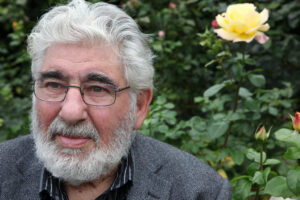
Lionel was 96 when he died, peacefully, in his own bed, as he wanted, with his family round him.
Family was a watchword for Lionel. The desire for a large family was one of the elements that drew us together in the early fifties. We were youth leaders at North London Progressive Synagogue at exactly the same time as the little Finchley community was gestating. The senior
rabbi of the Liberal movement approached us, asking us to join the new group. We jumped at the chance to help build it and, before we had our own family, we were central to the birth of what was to become FPS.
For decades FPS was Lionel’s second family and he was dedicated to the community. A former Chair of FPS and an active Vice-President, he
instilled in his children a love of the community too and all five have been involved at some times in their lives. Seven of his grandchildren had their B’nei Mitzvah on our Bimah.
Well into his eighties he was ever present, not only in services most Saturday mornings, but also on the end of the phone to answer any call from the synagogue office. The garden needs tending; off he trotted, secateurs in hand – he looked after the memorial garden for many years with dedication and love. The walls need painting; he was there to lead a team of member decorators. A light bulb needs changing; he was even seen up ladders to do the necessaries. In condolence correspondence, so many members shared their reminiscences of him in the synagogue, some of their stories going back forty or fifty years. He was a story teller and an educator and many memories relate to his weekly classes on aspects of Jewish history or other sessions he ran.
I know he will be missed not only by our family but by his second family too.
Lionel was an absolute stalwart of the ‘Beit Midrash’ series of Thursday evening talks that I ran for some ten years from 2011 to 2020. In the early years he and Sheila were regular attendees at the talks, Lionel often interjecting his opinion on the presenter’s ideas in characteristically forthright style.
In 2015 Lionel decided he wanted to have a go at it himself, offering to present a series entitled An Illustrated History of ye Jews in England. Thus began his unforgettable contributions, spanning five years and stretching to eight series in total, each of four to six talks on a particular theme. All the presentations centred on some episode, incident or personality in Jewish history that had caught his interest. The talks were invariably entertaining, idiosyncratic and full of interest. Examples included The Moguls of Hollywood, The Manhattan Project, The Panama Canal Scandal. The Dreyfus Affair, Superman is Jewish (at which he handed out superman comics he had purchased online for the occasion), Women of the S.O.E, The Mountain Jews of Azerbaijan, Jews of the Circus, Jewish Bolsheviks, Giants of Progressive Judaism, and many more. All were richly illustrated with slides and very often video clips or music to set the scene. Halfway through his seventh series covid struck, and we switched to Zoom, Lionel rapidly adapting to the new technology.
For me, our banter over email as Lionel devised his series is a memory I look back on with fond pleasure. A typical message ran: “Dear Adrian, I am currently preparing a new series of contributions for Beit Midrash. I need the discipline of research to take me away from complete indolence. My skeleton proposal is attached for your consideration. Please do not feel under any obligation.”
As Lionel often told me and as Sheila has confirmed, beavering away at his presentations, often for weeks on end, gave him pleasure and a sense of achievement through those years. And for me, tasked with filling the programme year-round, Lionel’s regular series were a godsend and my abiding memory of him.
A POEM WRITTEN BY LIONEL KING LASSMAN
When I die and I shall
I shall miss nights such as this
A golden sky
A remnant of cloud
And vapour trails
Lit by the setting sun,
I shall miss my whiskey and soda
Sheila calling – where are you?
And I shall be long gone
Beyond the clouds
And Vapour trails.
A hint of Mozart
Here with me
The cars outside my window
Worlds apart
Going beyond my vision
To worlds unknown
It will all go on
And I will let it now
Resting in the Lethe of nothingness
But no regrets
I knew it once
And lived a life full of life
My progeny live on
My posterity
And life goes on
Will I be there?
Or will I rest here
In peace?
Copyright © 2026 Finchley Progressive Synagogue. All rights reserved. Website designed by Addicott Web. | Charity #1167285